

This buttermilk brined turkey comes out juicy and perfectly spiced with no babysitting, no basting, and no injecting! Let me show you how simple it is to serve up Southern-style flavor for your holiday meal without the drama.
And if you enjoy this recipe, you'll love my Cajun butter-roasted turkey breast, too!

Jump to:
- ❤️ Why You'll Love this Recipe
- What does buttermilk brine do to turkey?
- What You'll Need for this Recipe
- Substitutions & Variations
- How to Make a Spatchcock Buttermilk Turkey
- Pro Tip #1
- Pro Tip #2
- Pro Tip #3
- Pro Tip #4
- Pro Tip #4
- Pro Tip #5
- Pro Tip #6
- How-to Video (Watch Me Make This on YouTube)
- Frequently Asked Questions
- How to Serve
- More Favorite Holiday Recipes
- 📖 Recipe
❤️ Why You'll Love this Recipe
Simple to Make - Making the Thanksgiving turkey can be intimidating--which is why I avoided it for years. But this method is no fuss and comes together so simply, you might think you're doing something wrong. Don't worry, it's that easy! Just make your brine, spatchcock the turkey (optional), let it marinate, then roast. You'll have time and energy leftover to make the gravy, too.
Family-Approved Flavor and Texture - The buttermilk brine tenderizes the turkey meat and infuses flavor into every single piece. Not only is the meat succulent and tasty, but every inch of skin gets crispy with the spatchcock method.
For the holidays, I love to treat my family to main dishes that are stunning yet simple enough that I don't get stressed out. Peep my Frenched rack of lamb with mint chimichurri, bourbon peach glazed ham, butter-basted ribeye steak, and crispy roast chicken recipes next!
What does buttermilk brine do to turkey?
Brine is a salty mixture used to tenderize and flavor turkey. The salt breaks down the meat's muscle proteins, allowing it to absorb liquid and hold onto moisture as it cooks. Adding buttermilk introduces lactic acid to make the meat even more tender.
Additionally, the buttermilk provides sugars that will caramelize during the roasting process. That's how we get golden, crispy skin!
The most simple buttermilk brine recipe is just buttermilk and salt, but we're adding a few more easy ingredients to infuse the turkey with salty, smoky, herby, and savory flavor.
What You'll Need for this Recipe

Uncooked Turkey, between 10 and 14 pounds. You can use a bigger bird depending on your crowd size, but you will need to increase the brine by about one cup for every additional pound of turkey.
Buttermilk is more acidic than regular milk, which breaks down protein fibers in the turkey meat, making it more tender.
Hot Sauce is my secret ingredient to boost flavor and moisture! I'm partial to Louisiana hot sauce, but you can use your favorite brand, like Crystal, Tabasco, Chula, etc.
Check out the recipe card below for full ingredients list, measurements, nutrition facts, and step-by-step instructions!
Substitutions & Variations
Salt - Coarse salt, like kosher salt or canning salt, works best in this recipe, but you can substitute with table salt or fine sea salt, if need be. Grains of table salt are smaller and denser, so you'll want to use about two-thirds the amount compared to coarse salt.
Herbs and Spices - Feel free to adjust the herb and spice blend to incorporate what your family enjoys the most. This recipe includes sage, bay leaf, smoked paprika, onion powder, and black pepper.
Other Birds - This brining method works with chicken, duck, and quail, too. Reduce the marinating time according to the weight of these smaller birds. You can also make this recipe with turkey parts like a batch of wings, turkey legs, or even buttermilk-brined bone-in turkey breast.
How to Make a Spatchcock Buttermilk Turkey
Making the Buttermilk Brine

- Step One: Add two cups of the buttermilk to a small saucepan with hot sauce, garlic, herbs, and spices, stir to combine, and bring to a boil. (Photos 1-3) Let it simmer, stir in the salt to dissolve, then cool to room temperature. (Photo 4)
Pro Tip #1
You can prepare this brine infusion up to three days ahead of time. Just store it in an airtight container in the refrigerator.
Spatchcocking (optional) and Buttermilk Brining the Turkey

- Step Two: Lay the turkey breast side down on a cutting board and use kitchen shears to cut along the backbone, alternating cuts on either side of the backbone as you go. (Photos 5-7) Remove the backbone, neck, and giblets, and set them aside for making turkey broth, gravy, or discard them. (Photo 8)
Pro Tip #2
Spatchcocking the turkey is optional, but I highly recommend it so that you can get beautiful, crisp skin all over your bird. This step also promotes even cooking and reduces your roasting time significantly! Need more visuals? Watch me spatchcock this turkey on YouTube.

- Step Three: Turn the turkey over and press it down firmly until you hear the cartilage pop and it lies flat. (Photo 9)
- Step Four: Transfer the turkey to a brining bag, then pour in the cooled infused buttermilk and the plain buttermilk. Seal the bag and place in the fridge for up to 48 hours. (Photo 10)
Pro Tip #3
I recommend these turkey brining bags because they seal well and are easy to double-layer, since I'm paranoid about leaking turkey juices all over my fridge!
Pro Tip #4
The longer you can let the brine do its thing, the better! I recommend starting two days before Thanksgiving, and turning the bag about two times per day so all parts of the turkey get completely submerged.
Cooking the Turkey

- Step Five: About two hours before dinnertime, pull the turkey out of the brine and let it come to room temperature. (Photo 11)
- Step Six: Place the turkey on a sheet pan and transfer to the oven to roast until the internal temperature reaches 160 degrees Fahrenheit. You'll notice this turkey doesn't produce a ton of pan drippings, and that's because it keeps most of the moisture inside!(Photos 12-13)
Pro Tip #4
If you plan on making gravy for this turkey (instructions are just below), save some of the buttermilk brine to use later!
Pro Tip #5
While you don't need to baste or rotate this turkey, I do recommend checking it to make sure it's browning evenly. If some parts of the turkey (like the wings or drumsticks) are browning too much, tent them loosely with aluminum foil.
Making the Gravy

- Step Seven: While the turkey roasts, bring the backbone, neck, and/or giblets to a boil with chicken broth, then simmer for an hour. Strain the liquid into a bowl and discard the solids.
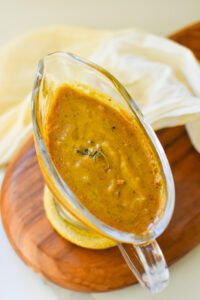
- Step Eight: Melt butter in the same pot, then add onion and flour, followed by reserved buttermilk and turkey stock. Cook until bubbly and thickened, and serve warm with your turkey.
Pro Tip #6
You can make the gravy ahead while the turkey is brining and reheat it before serving.
How-to Video (Watch Me Make This on YouTube)
Frequently Asked Questions
Store cooked turkey in an airtight container. Carving or fully deboning the meat will make it easier to fit into containers, but you can also wrap the turkey carcass in plastic wrap, followed by aluminum foil. Store the gravy separately. Keeps for up to four days.
To freeze, I recommend carving or deboning the turkey for even freezing and easy reheating. Wrap each piece in aluminum foil, then place into airtight, freezer-safe containers before transferring into the freezer. Keeps for up to six months. Do not freeze the gravy.
If you choose to debone the turkey, save the bones to make turkey bone broth!
Looking for ways to remix your leftover turkey? Chop it up and bake it into a turkey pot pie!

How to Serve
Serve your turkey warm and paired with gravy--either the included recipe or my lip-smacking turkey neck & giblet gravy. For a festive holiday dinner spread, garnish it with fresh fruits and herbs, such as slices of citrus, apples, or pears, and sage, parsley, or rosemary.
This dish goes wonderfully with slow-cooked candied yams, garlic parm mashed potatoes, pecan sweet potato casserole, Soul Food-style mac and cheese, and spiced bourbon cranberry sauce for Turkey Day or Christmas dinner.
Check out my Soul Food Thanksgiving menu for the perfect southern meal from start to finish!
More Favorite Holiday Recipes
Looking for other recipes like this? Try these:


I hope you and your family enjoy this best buttermilk turkey and gravy soon and very soon. And sharing is caring, so be sure to pin this recipe for later and follow me over on Pinterest. Thanks for reading!

📖 Recipe

Southern Spiced Buttermilk Brined Turkey (Spatchcock)
Equipment
- 1 wire rack optional
Ingredients
For the Turkey
- 10-14 pounds uncooked bone-in turkey
For the Spiced Buttermilk Brine
- 3 quarts buttermilk divided
- ½ cup coarse salt
- ¼ cup hot sauce
- 8 cloves garlic crushed or minced
- 4 bay leaves
- 2 tablespoons smoked paprika
- 1 ½ tablespoon black pepper preferably coarse or freshly-cracked
- 1 ½ tablespoon onion powder
- 1 tablespoon rubbed sage
For the Buttermilk Gravy
- reserved turkey neck, giblets, and/or backbone
- 4 cups broth
- 4 tablespoons unsalted butter
- ½ onion diced
- ¼ cup all-purpose flour
- ¼ cup reserved buttermilk from the brine
Instructions
- Prepare the Brine: Add two cups of the buttermilk, hot sauce, garlic, bay leaves, smoked paprika, black pepper, onion powder, and rubbed sage to a small saucepan over medium heat and bring to a light boil. Reduce heat to low and simmer for 20 minutes, then remove from heat and cool to room temperature. Dissolve the salt in this mixture.3 quarts buttermilk, ½ cup coarse salt, ¼ cup hot sauce, 8 cloves garlic, 4 bay leaves, 2 tablespoons smoked paprika, 1 ½ tablespoon black pepper, 1 ½ tablespoon onion powder, 1 tablespoon rubbed sage
- Spatchcock the Turkey (optional, but encouraged): Lay a thick dishcloth out on the counter, then place your cutting board on top of it to prevent slipping and sliding. Place the turkey, breast-side down on the cutting board, then use kitchen shears to cut along both sides of the backbone, about one inch at a time, alternating sides between cuts so that you make equal progress all the way down. Remove the backbone.10-14 pounds uncooked bone-in turkey
- Remove the turkey neck and giblets and set aside for the gravy.
- Flip the turkey over so that it is breast-side up, then spread out the legs, and firmly press down on the breastbone to spatchcock the turkey. You will know it's done properly when you no longer hear the cartilage make a popping sound and the bird is able to lie completely flat.
- Brine the Turkey: Add turkey to a brining bag, then pour in the infused buttermilk and cold buttermilk. Squeeze out any air as you seal the bag then place in the refrigerator to brine for 24 to 48 hours (the longer the better), turning the turkey every 12 hours so that it evenly marinates.
- Cook the Turkey: Remove the turkey from brining bag, letting the excess buttermilk drip into the bag then place it on a sheet pan and allow it to come to room temperature (about 45 minutes to one hour).
- Preheat oven to 450 degrees Fahrenheit. Place turkey on a sheet pan lined with a wire rack, aluminum foil, or parchment paper, wrap the wing tips with aluminum foil, then transfer to the oven to roast for 30 minutes. Reduce the heat to 400 degrees Fahrenheit and continue cooking for 40 minutes or until the internal temperature reaches 160 degrees Fahrenheit. If parts of the turkey are browning too much or too quickly, tent them with aluminum foil.
- Make the Gravy: While the turkey roasts, add turkey neck, giblets, and backbone if using to a saucepan with broth over medium-high heat. Bring to a boil, then reduce heat to low, cover and simmer for an hour. Remove from heat, strain the liquid into a heat-safe bowl, and discard the turkey parts.reserved turkey neck, giblets, and/or backbone, 4 cups broth
- Add butter to saucepan over medium heat and allow to melt, then add onion until fragrant (four minutes). Whisk in the flour until it's dissolved in the butter and mixture turns a golden brown (about three minutes). Whisk in the reserved buttermilk and strained turkey stock until smooth. Continue cooking for 15 minutes or until thickened and bubbly, then remove from heat. Taste test and add seasonings, as needed.4 tablespoons unsalted butter, ½ onion, ¼ cup all-purpose flour, ¼ cup reserved buttermilk from the brine
- Finish and Serve: Allow turkey to rest for about 30 minutes so that the juices can redistribute and residual heat can bring it to 165 degrees Fahrenheit. Carve or serve whole with gravy, and aromatic garnishes like orange slices, fresh sage, rosemary, etc.


Love this recipe? Leave me a Comment!