

Ewa riro is a hearty and flavorful traditional Nigerian stewed beans recipe made in one pot. Learn how to make it in about an hour!
If you're trying to learn how to make Nigerian recipes or just looking for a filling and flavorful one pot beans recipe, you're in the right spot. You'll love this protein filled recipe for ewa riro on stovetop. The ingredient list is simple but everything combines for an unforgettable Yoruba delicacy you can enjoy for any meal of the day. Let's get into it!
If you enjoy ewa riro, you'll also love these classic Nigerian recipes like jollof rice or yaji seasoning. Ewa riro is a favorite on the Nigerian side of my family and Soul Food style black eyed peas are the top pick on my Black American.
What You'll Need for this Recipe
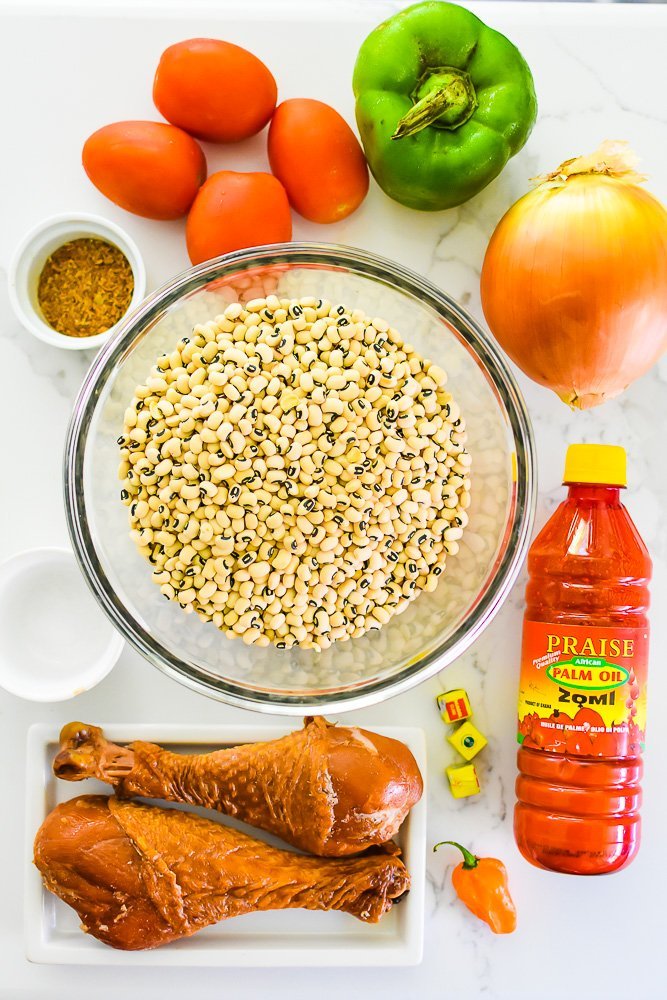
My ewa riro is made with a combination of traditional Nigerian ingredients and a couple of readily available swaps to make this an approachable recipe if you live outside of Nigeria. Here's what to add to your grocery list.
- Bell Pepper
- Crayfish
- Maggi Cubes
- Nigerian Brown Beans (or Black Eyed Peas)
- Onion
- Palm Oil
- Roma Tomatoes
- Scotch Bonnet Pepper
- Smoked Turkey
- Sea Salt
- Water
Making ewa riro with ingredients available in the United States is absolutely possible. I can typically source this full list from my local grocery store but African food markets will carry everything you need. As far as tools, grab a sharp knife and cutting board, a blender or food processor, and a pot large enough to hold all the ingredients.

What Does Ewa Riro Taste Like?
Depending on which beans are used, the dish will have either a slightly sweet or earthy flavor. Ewa riro is traditionally made with Nigerian brown beans--aka honey beans--which aren't as readily available in the US so a relative, black-eyed peas, is often used. Nigerian honey beans are also used in dishes like moi moi and akara.
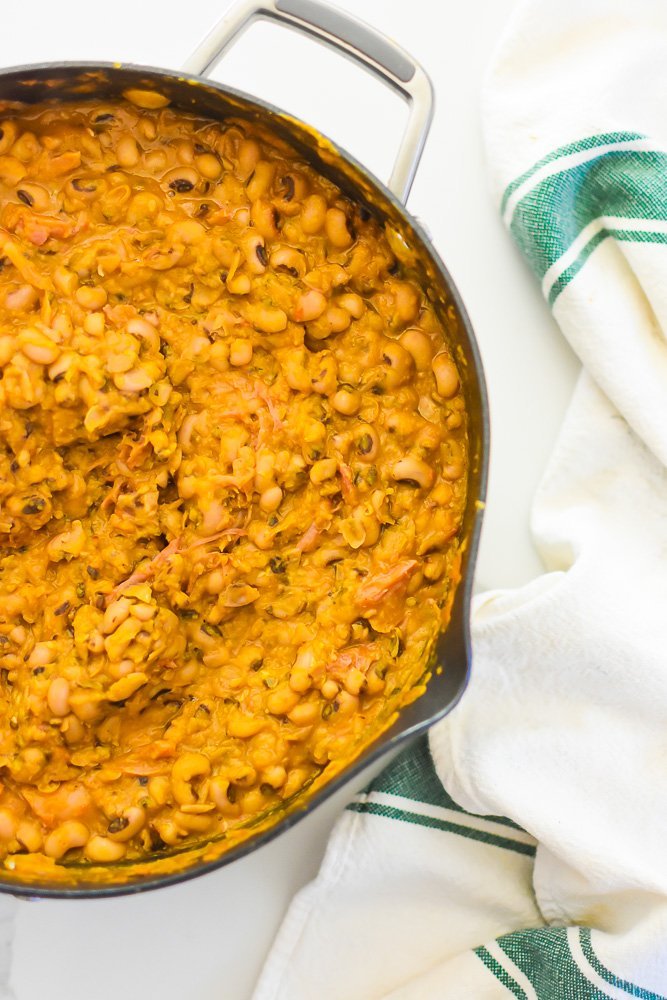
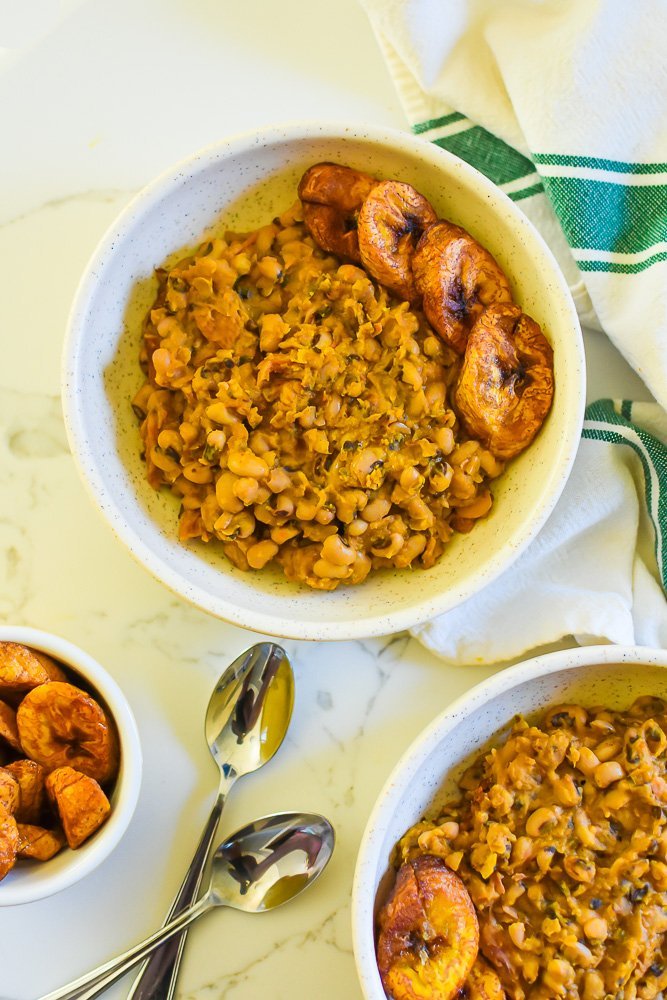
Turkey imparts a bit of smokiness and crayfish a delicious umami flavor. Texture-wise, ewa riro is dense, creamy, and rich so some people refer to it as beans porridge. If you use palm oil in beans, which I highly recommend, you'll notice additional savory and earthy layers of flavor. The same blend of tomatoes, onion, and pepper we use in rice and stew provides the flavor base and stewed texture. I like to make mine a spicy Nigerian beans recipe with hot habanero pepper.

How to Serve Ewa Riro?
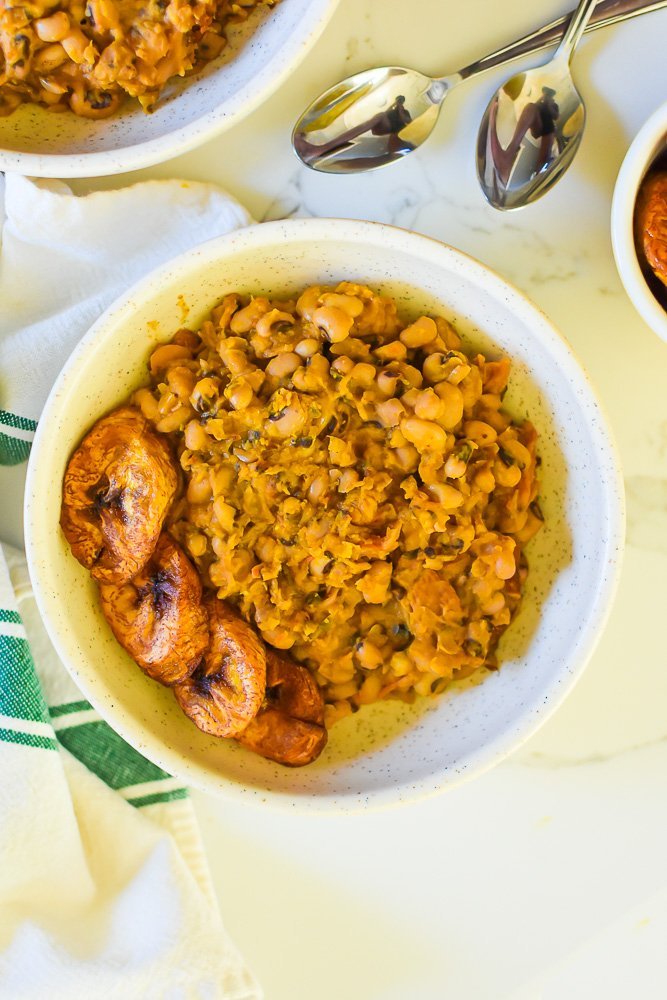
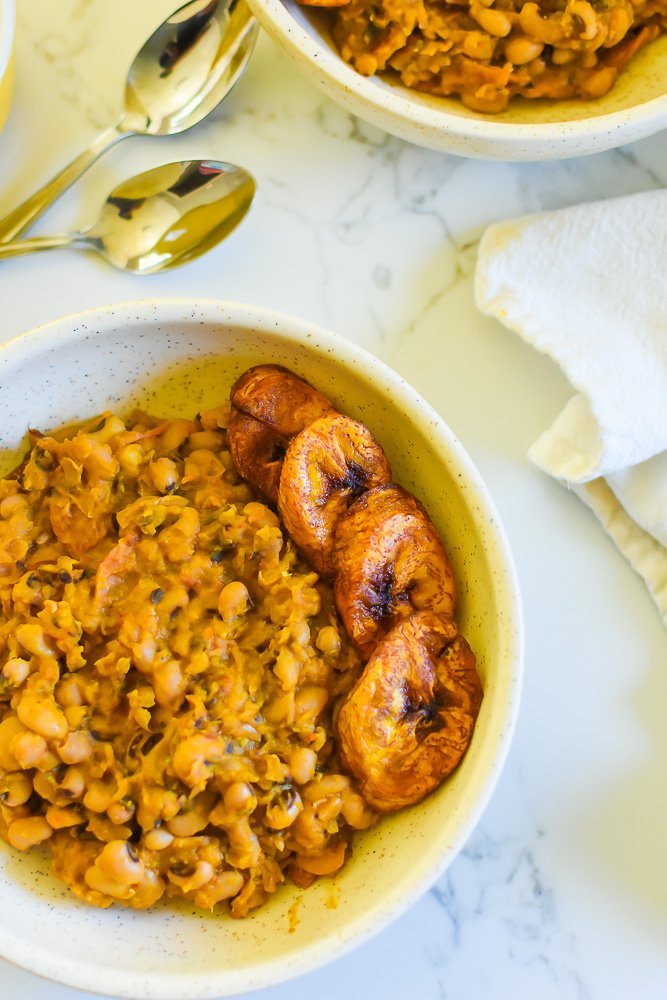
Simple dodo (friend plantains) is the perfect pairing for this dish. And I like to enjoy it with a small serving of vegetables or side salad but that's not required as ewa riro is a complete meal by itself with a combination of protein, fat, fiber, and carbohydrates. Not to mention the abundance of vitamins and minerals. Check out the recipe card below for full nutrition information.
Tips for this Recipe
- Mashing the beans is optional and will create an even thicker texture. I use the back of a wooden spoon to mash a few against the side of the cooking pot. This is entirely of to preference.
- Can I freeze cooked beans? Yes. I portion out my cooked black eyed peas or honey beans into Souper Cubes and store in the freezer for up to six months.
- This recipe calls for two pounds of smoked turkey but the amount or presence of meat is optional if you want to make this a vegetarian meal. You can also use different parts such as turkey wings.
- You can also try making ewa riro in a slow cooker or pressure cooker.
More Naija Recipes to Love
If you enjoy Soul Food versions of stewed black-eyed peas, I highly encourage you to try this predecessor recipe! And sharing is caring so be sure to pin my Nigerian bean recipe for later and follow me over on Pinterest. Thanks for reading!

Nigerian Ewa Riro Recipe
📖 Recipe

Ewa Riro (Nigerian Stewed Beans)
Ingredients
- 32 ounces black eyed peas or Nigerian brown beans if you can find them
- water
- 2 pounds smoked turkey
- 4 roma tomatoes
- 1 bell pepper
- ½ onion
- 1 scotch bonnet pepper
- 3 Maggi cubes
- 2 teaspoons ground crayfish
- ¼ cup palm oil
- sea salt to taste
Instructions
- Rinse beans and add to a large pot. Add enough water to cover the beans by one inch then add turkey to the pot.
- Cover pot and cook over medium heat until beans have softened and most of the water has cooked off (about 45 minutes).
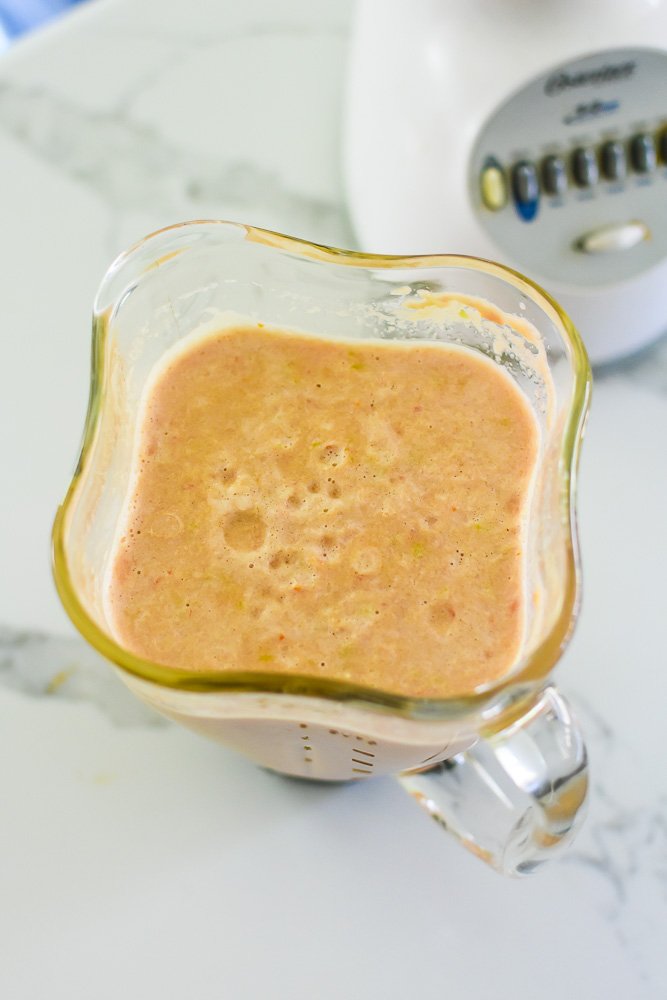
- While beans cook, cut tomatoes, bell pepper, and onion into chunks. Add to blender with habanero pepper and one cup of water to assist blending process. Pulse ingredients in blender until a liquified, uniform mixture forms. Crush Maggi cubes into a powder.
- Remove turkey from cooked beans and add in tomato mixture, crayfish, maggi cubes, and palm oil. Stir until incorporated.
- Remove turkey meat and skin from bones and shred into bite sized pieces. It's helpful to use two forks for this.
- Stir meat back into pot and continue cooking beans for another 30 minutes to one hour to achieve desired thickness and texture. Taste test and add salt, as needed.
Notes
- Mashing the beans is optional and will create an even thicker texture. I use the back of a wooden spoon to mash a few against the side of the cooking pot. This is entirely of to preference.
- Can I freeze cooked beans? Yes. I portion out my cooked black eyed peas or honey beans into soup cubes and store in the freezer for up to six months.
- This recipe calls for two pounds of smoked turkey but the amount or presence of meat is optional if you want to make this a vegetarian meal. You can also use different parts such as turkey wings.
- You can also try making ewa riro in a slow cooker or pressure cooker.
Kavya Verma says
This Ewa Riro recipe looks absolutely delicious! I love how you explained each step so clearly, making a traditional Nigerian dish feel approachable. The serving suggestions and helpful tips are fantastic. I can't wait to try this with fried plantains. Thanks for sharing such a flavorful recipe!
Tea says
I'm proud to say I've made this today. It was a totally misaligned meal with our 30°C (86°F) summer day, but it didn't stop us from enjoying it. It will hit the spot better in winter :).
The reason I "had" to prepare it today is that I got my hands on my first ever plantains, and so I just had to try some dodo as per your recipe as well. It was lovely as well.
I took your advice and reduced the palm oil, so I could barely notice it. I did have to substitute red kidney beans as I can't get black eyed peas here. *And*, this was my first introduction to smoked turkey. We're a family that doesn't eat red meat, so the 'porky-ness' of this kind of turkey preparation was a revelation. I didn't even know I could buy that :).
I have a question regarding crayfish. I can't buy this anywhere. I've googled a lot, and found some expat Nigerians recommending baking shell-on shrimp in the oven on high until dry and then grounding it. I did that, but I don't feel like it tastes/smells like much at all. The way I understand it, there should be great 'funk' about it, but I'm not getting that at all. Is there a substitution you might suggest? I can't get shrimp 'stock cubes' either. I can get thai/indonesian shrimp paste - should this approximate the flavor? Maybe a bit of fish sauce? Some katsuobushi?
Thanks in advance.
Jazzmine Woodard says
So glad you made this recipe, Tea, and that the palm oil adjustment worked for you. I would recommend either shrimp paste from an Asian market and/or fish sauce as a more suitable substitute for crayfish if you can't find shrimp stock cubes. You are correct in that the crayfish adds a more pungent/funky taste and aroma to the dish that dried shrimp won't quite mimic. Hope you enjoy!
Tea says
Hi,
I’ve bought my first ever bottle of red palm oil, because I’m very curious to try some west African dishes for the first time.
My oil is of a brand “Afroase” and it’s made in Ghana. My question is – how is red palm oil supposed to smell/taste? Are you familiar with it being an acquired taste for new palates? Because I’m very curious to try some dishes with it, and I’m open to it tasting much better once it’s mixed with other foods and cooked with, as opposed to tasting the pure oil; that maybe it gives that “somethin’-somethin'” special, like it just wouldn’t be the same without it, even if it tastes unpleasant on its own. Is this how it is regarded? Because I really seem to dislike the taste on its own. It’s very difficult for me to explain how I perceive the taste. I don’t think it’s ‘rancid’ per se, or at least I *hope* it isn’t (and it’s 3 years before the ‘best before’ date). The smell is also quite pungent, with an almost ‘fishy’ quality to it. I googled *a lot* before ending up here, and got quite scared reading descriptions of ‘nutty, buttery, almost sweet taste reminiscent of carrots’, as this *profoundly* doesn’t describe my oil :).
On my quest for answers I did come across this forum: https://www.nairaland.com/32796/smelly-palm-oil where some Nigerian people suggest that there are actually two types of oil, one of them smelling very unpleasantly. Do I maybe have that 'wrong smelly oil'?
Any advice appreciated. Thanks!
Jazzmine Woodard says
Hi, Tea! I'm not familiar with that brand of palm oil and typically use Nigerian sourced brands, however, if it is labeled as palm oil with the sole ingredient of red palm oil, it should be a red/slightly orange color. Texture-wise, it will solidify at lower temperatures kind of like coconut oil but is still fine to use. When fresh, it should have an earthy, nutty taste that slightly resembles carrot but I've not known it to be fishy in taste or smell.
Tea says
Thank you for your reply.
Yes, it's definitely a deep red color and solidified in my fridge completely, and its import is, hopefully, regulated here in the EU and checked to be ' 100% palm oil' as it says on the label.
I just wondered if maybe there's a difference in processing that makes it more or less palatable, like the Nigerian people on the forum in the link I attached are wondering. Or that maybe us non-Africans simply need a little time to warm up to it taste-wise, or that it tastes better in the actual meal than it does on its own..
So the way I understood it, you don't feel like it's at all unpalatably smelling/tasting on its own?
Then I guess I'm in trouble, because I can't find any other palm oil where I live. My first foray into Nigerian food (via ewa riro) is maybe not as close as I thought :(.
Or maybe I'll risk it with this oil, I'll see...
Jazzmine Woodard says
It can definitely be an acquired taste. If you're uncertain, I would recommend using a smaller amount combined with another oil you're more familiar with for your first go at the recipe. Hope this helps!
Tea says
Yes! That does help. I'll definitely do that. And thanks for reassuring me that it can be an acquired taste.
Sorry to bother you some more, but you described the taste of it in your first reply, but I'm wondering about the smell? If your palm oil has any pungency in its smell? Does it at all have a somewhat 'musty' quality? I'm really struggling to explain how mine smells 🙂
Jazzmine Woodard says
No problem. The smell can be pungent but not fishy.
Britney says
I made these beans last night and enjoyed it with some fresh bread - it was delicious and so easy to make. I loved all of the flavors, especially with the chunks of smoked turkey!
Jessica says
I used black eyed peas and this was FANTASTIC. Smoky, saucy and so comforting. Will be making this again.
Kaluhi Adagala says
Talk about bold flavors!!!!! I loved loved loved this stew so so much! I loved it even more because I could easily find the ingredients here in Kenya! Super simple to put together and the flavors really came through!
Taneisha says
After trying your jollof rice, I knew this was the next recipe I wanted to try! It was so comforting, flavourful and filling! I served with some fried plantains and it was a hit! So so good!
Krys says
I was looking for black eye pea recipes and found your Nigerian Stewed Beans. So glad I did! Also, I highly recommend smashing the beans, as the recipe suggests! Love the texture and thickness it adds. Delicious!
Robin says
I usually make a pot of some type of legume weekly so it was refreshing to come across this recipe - we needed something new. The maggi cubes in combination with the palm oil gave the beans such a richness in flavor. I'm going to make these again for new year's eve.
Jazz says
Ewa riro would make a fab NYE dish!
LaKita says
These stew beans are the perfect filling bowl of comfort! So flavorful and delicious and your instructions made the whole process simple.
Shani Whisonant says
This was my first time making this recipe, and it won't be my last. What a delicious bite! It's so comforting and hearty (but not in a heavy way!), while reminding me of home. Thank you for sharing this recipe!
Marta says
I was actually able to find Nigerian brown beans at a local African market, which made me so happy. The added crayfish was a nice touch because it gave the beans even more flavor, which I didn't think was possible. So delicious.